
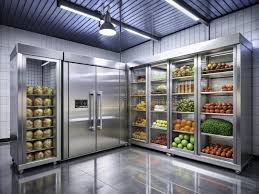
Behind every frozen product that reaches a consumer in perfect condition — whether it is a portion of premium seafood, a pack of ready-to-cook chicken, a carefully formulated pharmaceutical product, or a tub of artisan ice cream — there is an unbroken chain of temperature-controlled storage and handling that has protected it every step of the way. That chain is only as strong as its weakest link, and in Saudi Arabia’s demanding climate and rapidly growing consumer market, the frozen storage facility at the heart of that chain must perform without compromise, without interruption, and without exception. Across two of the Kingdom’s most commercially vital cities — Dammam and Jeddah — Units has built a reputation for frozen storage excellence that businesses across every sector have come to rely upon with complete confidence.
Frozen storage is the professional preservation of temperature-sensitive goods at sub-zero temperatures — typically maintained between -18°C and -25°C, with some specialized applications requiring even lower thresholds depending on the biological or chemical properties of the products being stored. Unlike chilled storage, which preserves goods in a refrigerated but unfrozen state, frozen storage halts microbial activity and biochemical deterioration almost entirely — making it the definitive solution for products that require long-term preservation without any compromise to their safety, nutritional integrity, or sensory quality.
The range of products that depend on professional frozen storage is both extensive and economically significant. Meat, poultry, and seafood represent the highest-volume categories, with the entire processing and distribution chain for these protein products dependent on maintaining unbroken frozen conditions from the processing facility through to the retail point of sale. Ready-to-cook and ready-to-eat frozen meals, pastry and bakery products, ice cream and frozen desserts, frozen fruits and vegetables, and raw food manufacturing ingredients all share this same dependency on reliable, precisely controlled frozen storage throughout their supply chain journey.
Beyond the food sector, frozen storage plays a critically important role in the pharmaceutical and life sciences industries. Certain vaccines, biological medicines, diagnostic reagents, and research samples require frozen conditions to maintain their efficacy and safety — and in these applications, any temperature deviation is not merely a quality concern but a patient safety issue of the highest order. Similarly, the cosmetics and personal care industry relies on frozen storage for the preservation of certain active ingredients and finished formulations that are sensitive to temperature fluctuations.
What distinguishes world-class frozen storage from merely adequate cold storage is the depth of engineering, operational discipline, and technological sophistication that underpins every aspect of the facility’s performance. Redundant refrigeration systems ensure that a mechanical failure in one unit never results in a temperature breach in the storage environment — because in frozen storage, there are no second chances. Continuous automated temperature monitoring systems record and log storage conditions at frequent intervals, providing an unimpeachable audit trail that satisfies the most demanding regulatory requirements. Intelligent alarm systems alert operations teams instantly to any deviation from specified temperature parameters, enabling rapid response before any product damage can occur.
Proper air circulation design ensures uniform temperature distribution throughout the storage chamber — eliminating the warm spots and cold gradients that can occur in poorly designed facilities and compromise the storage conditions for products in different areas of the chamber. Organized racking systems, clearly defined product zones, and advanced warehouse management software ensure that inventory is tracked with precision, picked accurately, and dispatched with full traceability documentation that gives clients and their customers complete confidence in the cold chain integrity of every product that passes through the facility. Units has invested comprehensively in every one of these dimensions of frozen storage excellence, creating facilities that deliver performance, reliability, and compliance at the highest international standards. Visit units.sa to discover the full scope of their frozen storage capabilities across Saudi Arabia.
Dammam is not merely Saudi Arabia’s Eastern Province capital — it is one of the Kingdom’s most strategically important logistics hubs, a city whose geographical position, port infrastructure, industrial base, and road network connections make it a critical node in the supply chains of businesses operating across the entire eastern and central regions of Saudi Arabia.
The demand for professional frozen storage in Dammam is driven by a powerful combination of factors that are unique to the Eastern Province’s commercial and demographic character. The region’s large and diverse population — encompassing Saudi nationals, a substantial expatriate community representing dozens of nationalities, and a significant industrial workforce — creates a consumer food market of considerable size and complexity, with demand for a wide variety of frozen protein products, convenience foods, and specialty frozen items that require reliable cold chain storage and distribution infrastructure.
Dammam’s position as a major import gateway — with King Abdulaziz Port processing large volumes of refrigerated and frozen cargo containers arriving from international markets — creates immediate demand for high-capacity, port-proximate frozen storage facilities that can receive incoming frozen shipments directly and hold them under proper conditions until they are distributed to downstream customers across the Kingdom. For importers and distributors of frozen food products, the availability of professional frozen storage in Dammam close to the port dramatically reduces the cold chain risks and logistics costs associated with moving frozen goods long distances before placing them in storage.
The Eastern Province’s thriving food service industry — encompassing hotels, restaurants, corporate catering operations, and institutional food service providers serving the region’s large industrial workforce — generates sustained demand for organized, efficient frozen storage and distribution services that can reliably supply their kitchens with the consistent quality and quantity of frozen products their operations require. Units serves all of these demand segments through its premium frozen storage operations in Dammam, combining a strategically advantageous location with state-of-the-art frozen storage infrastructure, redundant refrigeration engineering, and a dedicated operations team that understands the unique rhythms and requirements of the Eastern Province’s cold chain environment. Whether you need high-capacity post-import frozen holding, organized distribution storage for ongoing retail and food service supply, or specialized frozen storage for pharmaceutical or life sciences products, Units delivers the solution with the reliability and professionalism your business demands. Explore Units’ Dammam frozen storage capabilities today at units.sa.
Jeddah’s commercial DNA is defined by its extraordinary diversity — a port city, a retail capital, a tourism and hospitality hub, a gateway to the holy cities, and a major center for food and beverage distribution, pharmaceutical supply, and consumer goods trade. This diversity creates a frozen storage demand landscape in Jeddah that is broader, more varied, and arguably more demanding than anywhere else in Saudi Arabia outside of Riyadh.
The food and beverage sector alone generates enormous frozen storage requirements in Jeddah. The city’s thousands of restaurants, hotels, international fast food chains, supermarket and hypermarket chains, wholesale food distributors, and catering companies all require reliable, organized, and efficiently operated frozen storage and distribution services to keep their operations running smoothly and their customers satisfied. Jeddah’s position as a major import hub — with King Abdulaziz Port serving as one of the largest and busiest commercial ports in the entire Middle East — means that vast quantities of frozen food products, pharmaceutical cold chain cargo, and other temperature-sensitive goods enter Saudi Arabia through Jeddah and require immediate, high-quality frozen storage before onward distribution.
The pharmaceutical sector’s requirements for frozen storage in Jeddah are growing rapidly alongside the expansion of Saudi Arabia’s healthcare infrastructure and the increasing complexity of the medicines and biological therapies being distributed through the Kingdom’s supply chain. Vaccines, biologics, and specialty pharmaceutical products that require frozen storage conditions demand facilities that not only maintain the correct temperature consistently but also provide the comprehensive documentation, traceability, and regulatory compliance capabilities that Saudi Arabia’s pharmaceutical distribution regulations require.
Units has built a frozen storage operation in Jeddah that is equal to every one of these demands — combining premium facility infrastructure with advanced cold chain technology, meticulous operational discipline, and the deep local market knowledge that effective Jeddah operations require. Their Jeddah frozen storage facilities offer flexible capacity configurations to accommodate businesses at every scale, real-time inventory management for complete stock visibility, full regulatory compliance documentation for food and pharmaceutical clients, and seamless integration with transportation and distribution networks serving the entire western region of Saudi Arabia. Units’ commitment to continuous improvement means their Jeddah frozen storage operations are always evolving — adopting new technologies, refining operational processes, and raising the bar on service quality to ensure that their clients always have access to the best frozen storage solution available in the Kingdom. Discover the full range of frozen storage services available in Jeddah at units.sa.
Conclusion
In Saudi Arabia’s fast-growing, high-demand market for cold chain logistics, the frozen storage partner you choose will determine the integrity of your products, the reliability of your supply chain, and the satisfaction of your end customers. Across Dammam and Jeddah — two cities that together represent the commercial backbone of two of Saudi Arabia’s most important regions — Units has earned its place as the Kingdom’s premier frozen storage provider through an uncompromising commitment to temperature control excellence, operational precision, regulatory compliance, and customer partnership that goes far beyond the provision of warehouse space. Your products represent your business’s most valuable assets — protect them with the best. Visit units.sa today and discover how Units can build the frozen storage solution that your supply chain deserves.
Frequently Asked Questions (FAQs)
Q1. What temperature range does professional frozen storage maintain, and why is it important? Professional frozen storage maintains temperatures between -18°C and -25°C, with some specialized applications requiring lower thresholds. This temperature range is critical because it halts microbial activity and biochemical deterioration almost entirely — preserving the safety, nutritional integrity, and sensory quality of frozen products for extended periods. Any deviation above these temperatures, even temporarily, can compromise product quality and safety, making consistent temperature maintenance the most fundamental requirement of any frozen storage operation.
Q2. How does Units ensure uninterrupted frozen storage conditions in Dammam and Jeddah? Units protects against temperature breaches through multiple layers of engineering and operational safeguards including redundant refrigeration systems that prevent any single mechanical failure from affecting storage conditions, continuous automated temperature monitoring and logging systems, intelligent alarm systems that alert operations teams instantly to any parameter deviation, backup power systems that maintain refrigeration during grid outages, and trained operations teams available around the clock to respond to any system alerts with immediate corrective action.
Q3. Why is professional frozen storage in Dammam particularly valuable for import and distribution businesses? Dammam’s proximity to King Abdulaziz Port makes it a natural first point of entry for frozen food and cold chain cargo arriving from international markets. Professional frozen storage in Dammam allows importers and distributors to receive and hold large frozen shipments under proper conditions immediately upon arrival — eliminating the cold chain risks and additional costs associated with transporting frozen goods long distances before placing them in appropriate storage. Units’ strategically located Dammam facilities are specifically designed to serve this critical port-proximate storage need. Visit units.sa for details.
Q4. Can Units handle both food and pharmaceutical frozen storage requirements in Jeddah? Yes. Units provides frozen storage solutions in Jeddah that are specifically designed and operationally equipped to serve both the food and beverage and pharmaceutical sectors. Their pharmaceutical frozen storage capabilities include the precise temperature management, comprehensive documentation, full traceability, and regulatory compliance infrastructure that Saudi Arabia’s pharmaceutical distribution regulations require — ensuring that vaccines, biologics, and specialty medicines maintain their efficacy and safety throughout their storage period with Units.
Q5. How do I arrange frozen storage services with Units in Dammam or Jeddah? Arranging frozen storage services with Units is a straightforward and fully supported process. Visit units.sa to explore their frozen storage facilities and service capabilities in both Dammam and Jeddah, then contact the Units client services team with your specific requirements — including product types, storage volumes, temperature specifications, inventory management needs, and any regulatory compliance requirements applicable to your products. Their experienced cold chain consultants will assess your needs thoroughly, design a customized frozen storage solution, and provide a transparent and competitive proposal with full onboarding support to ensure your cold chain operations begin seamlessly and perform to the highest standards from the very first day.